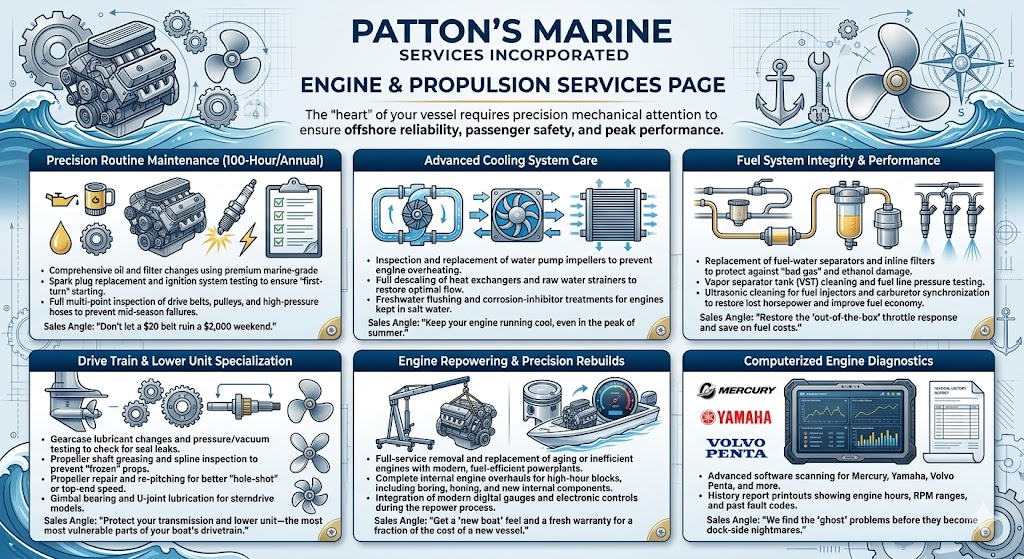
The “heart” of the boat requires the most consistent mechanical attention to ensure reliability and safety.
Daily Transaction Recording: Accurately documenting all financial transactions, including sales, purchases, payments, and receipts, ensuring real-time updates to financial records.
Data Entry: Inputting financial data into accounting software to maintain an up-to-date ledger.
Categorization of Transactions: Classifying transactions into appropriate categories, such as expenses, income, and assets, for better financial tracking and reporting.
Bank Reconciliation: Regularly comparing the company’s financial records with bank statements to identify discrepancies and ensure accuracy.
Credit Card Reconciliation: Matching credit card statements with company records to verify charges and payments.
Inter-company Reconciliation: For businesses with multiple entities, reconciling accounts between them to ensure accurate financial reporting.
Receipt Management: Organizing and managing receipts to ensure all expenses are documented and accounted for.
Expense Reports: Generating detailed reports that categorize and summarize expenses for easier review and analysis.
Invoice Processing: Receiving and processing vendor invoices for payment, ensuring timely payment to maintain good relationships with suppliers.
Payment Scheduling: Organizing payment schedules to manage cash flow effectively and avoid late fees.
Loyalty Initiatives: Design programs that encourage repeat business and foster customer relationships.
Community Building: Develop strategies to engage customers and create a community around the brand.
Document Management: Organizing and storing financial documents securely, including invoices, receipts, and bank statements, ensuring compliance and ease of access.
Backup and Security: Implementing systems for regular backups and security measures to protect sensitive financial data.
Stay updated with our latest news, tips, and exclusive offers. Subscribe now for insights!